144 user bytes
Distinguish usable data space from total EEPROM.
Check the full product specification before ordering.
SKU: MF-ULTRALIGHT-C
512 in stockLast stock check: 18:45, 30 Oct 2026 UK time
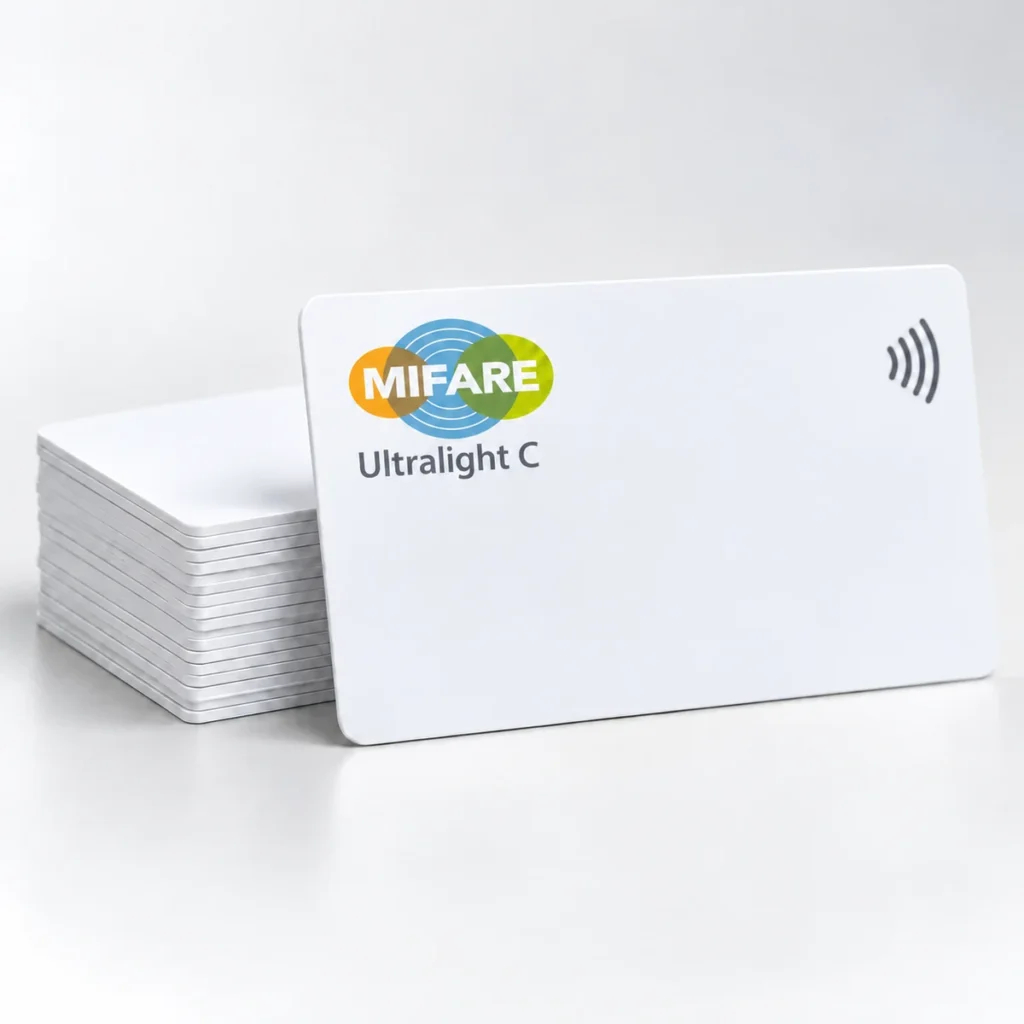
NXP MIFARE Ultralight C cards provide blank white stock for a compatible limited-use ticketing, loyalty or event application. The 100-card pack combines a printable physical credential with the Ultralight C chip format. Plan around its 144 bytes of user memory and the authentication method used by your system.
Prices exclude VAT. Choose the exact pack or option you need.
Distinguish usable data space from total EEPROM.
Configure suitable keys and compatible reader software.
Print and encode to your approved application specification.
NXP MIFARE Ultralight C cards provide blank white stock for a compatible limited-use ticketing, loyalty or event application. The 100-card pack combines a printable physical credential with the Ultralight C chip format. Plan around its 144 bytes of user memory and the authentication method used by your system.
NXP specifies 192 bytes of total EEPROM, of which 144 bytes are user data memory. The remaining space serves identifiers, locking, configuration and authentication-key functions. Use the 144-byte figure when assessing the space available for your application's data.
Ultralight C uses 13.56 MHz communication at 106 kbit/s and complies with ISO/IEC 14443 Type A parts 2 and 3. Its 3DES authentication capability requires compatible hardware, software and appropriate keys. It is not a promise of compatibility with every NFC reader or of complete protection for any application.
Before ordering, confirm the chip family, data layout and personalisation process with your system provider. For printing, check that your card printer accepts the supplied stock. Read the NXP Ultralight C data sheet for the memory map and authentication details.
Choose NXP MIFARE Ultralight C cards by the application specification, rather than by a general NFC label. Keep the required record layout and reader details with your order. This is especially useful when replacing older stock or comparing cards whose total-memory descriptions look similar.
Prepare a sample that includes the finished print and encoded data. Check names, numbers or barcodes on the actual card and verify the intended reader response. Compare Ultralight EV1 only if the system provider supports that different chip format. For a compact NFC tag record, the NTAG213 listing is another technology to assess separately.
NXP specifies 144 bytes of user data within 192 bytes of total EEPROM. Identifiers, keys and other system functions occupy the remaining memory. Use the user-memory figure when checking your data layout.
No. They are separate product families with different memory structures and commands. Choose the chip requested by your reader and application supplier.
The 3DES authentication feature needs a compatible reader, software and appropriate keys. Agree the configuration and test it before a rollout; the blank physical card does not configure the wider system.
Choose the required quantity and check the selected option before adding it to your basket. For help with the card specification, artwork or a matching accessory, contact ACB.
| Chip family | NXP MIFARE Ultralight C |
|---|---|
| Total EEPROM | 192 bytes / 1536 bits |
| User data memory | 144 bytes |
| Authentication support | 3DES; compatible reader and keys required |
| Frequency | 13.56 MHz |
| Contactless interface | ISO/IEC 14443 Type A, parts 2 and 3 |
| Data rate | 106 kbit/s |
| Pack quantity | 100 cards |
| Brand | Mifare |
| Product code | MF-ULTRALIGHT-C |
Check the complete manufacturer specification, selected options and included items before ordering.
Dispatch depends on the exact product and availability. Confirm any required date with ACB. For personalised products, production follows artwork/proof approval and courier transit is separate.
Read the delivery & returns policyHave the product code, existing equipment or card reference, quantity and intended use ready. ACB can help you check what needs confirming.
Call 01308 426312Match the exact model, card format or attachment when choosing supplies and accessories.
CONTINUE EXPLORING
Explore more products and check the exact model, fitting or technology before ordering.
6,158 in stock
SKU: DS4KHI