
Plastic vs Eco Membership Cards: Which Is Right for Your Programme?
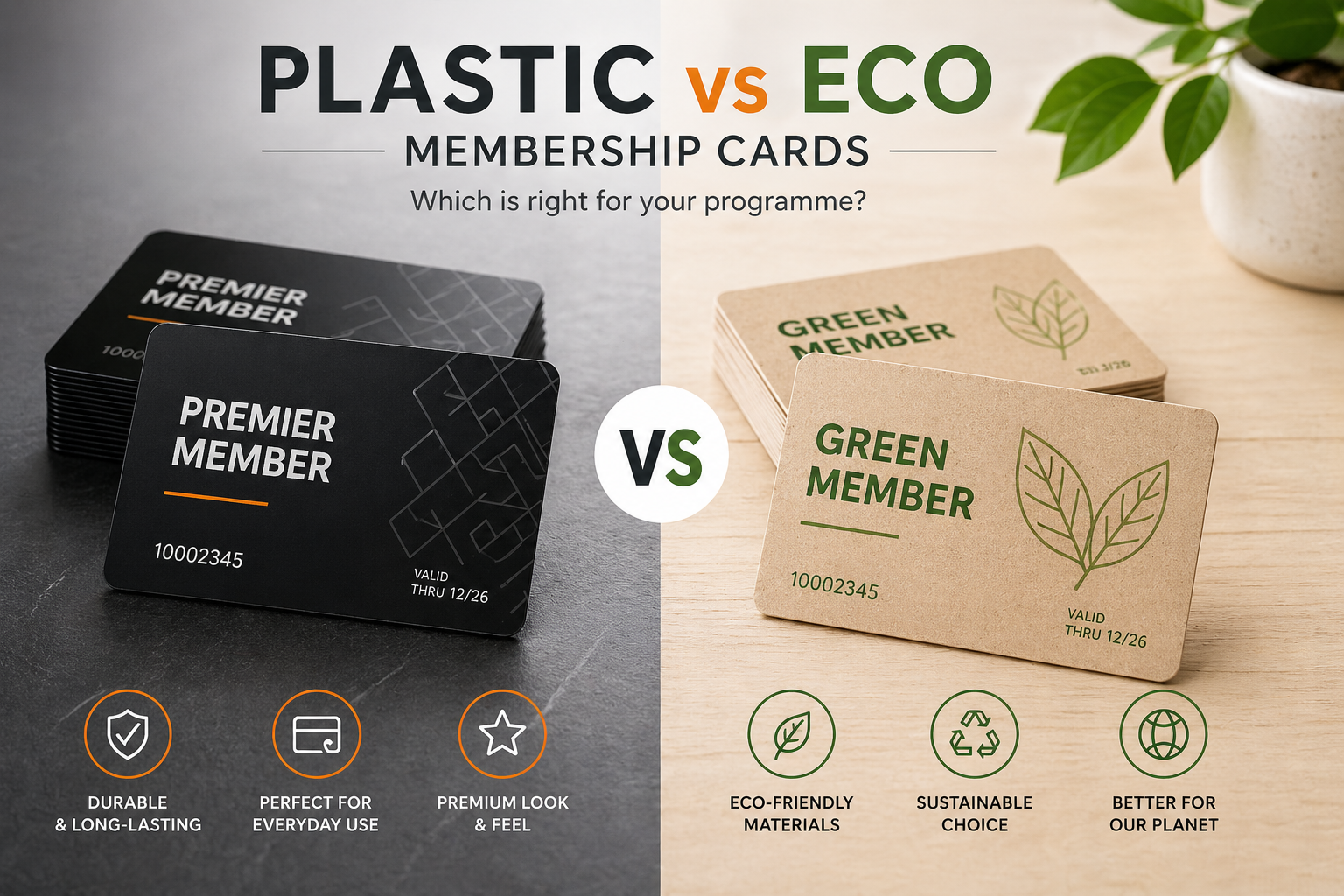
Choosing between plastic membership cards and eco membership cards is one of the most common decisions organisations face when launching or updating a membership programme. Both options can work well, but the right choice depends on how your cards will be used, how long they need to last, the impression you want to create, and how important lower-impact materials are to your brand.
In this guide, we compare plastic and eco membership cards across durability, presentation, cost, member perception and practical use. The goal is simple: help you choose the best fit for your programme.
What is the main difference between plastic and eco membership cards?
The biggest difference is material choice. Plastic membership cards are typically chosen for durability, consistency and a familiar premium feel. Eco membership cards are chosen when a programme wants to move towards lower-impact materials such as recycled PVC, paperboard or wood-style alternatives.
In practice, eco membership cards are not just one single material. They are a group of alternatives, each with different strengths. Some eco options behave similarly to standard plastic cards, while others are better suited to shorter-life programmes or brands where sustainability messaging is a visible part of the member experience.
Looking for a broader overview first? See our membership cards page, or go straight to Plastic Membership Cards and Eco Membership Cards.
Plastic vs eco membership cards at a glance
| Factor | Plastic Membership Cards | Eco Membership Cards |
|---|---|---|
| Durability | Usually the strongest option for everyday handling and long-term use. | Varies by material. Recycled PVC may be close to standard plastic, while board and wood-style options may suit lighter or more design-led use. |
| Appearance | Clean, consistent, familiar and professional. | Can create a more natural, lower-impact or brand-led look depending on the material. |
| Best for | Gyms, clubs, retail programmes and organisations needing long-lasting cards. | Brands and programmes where sustainability goals or material choice are a stronger part of the buying decision. |
| Barcode / QR / numbering | Strong fit for these features. | Often possible, depending on the chosen eco material and specification. |
| Member perception | Premium, reliable and familiar. | Can strengthen environmental positioning and brand values when used appropriately. |
| Material choice | Usually standard plastic card specification. | Can include recycled PVC, paperboard, wood-style cards and other lower-impact options. |
When plastic membership cards are usually the better choice
Plastic membership cards are often the strongest option where cards need to be handled frequently, carried in wallets, scanned regularly or kept in use over a longer period. They are a good fit for programmes that value consistency, durability and a more traditional card feel.
- Gyms and leisure centres with frequent desk checks
- Retail programmes with repeat member use
- Clubs with annual renewals and replacement card demand
- Membership schemes where barcode, QR or numbering must remain highly reliable
If your members will use the card often and you want the safest all-round option for long-term wear, plastic is usually the easiest choice.
When eco membership cards may be the better choice
Eco membership cards are a strong option when lower-impact materials are important to your organisation, your members or your brand positioning. They can work especially well in programmes where sustainability messaging is part of the member experience rather than just a background detail.
- Brands with visible sustainability goals
- Membership programmes where material choice supports customer perception
- Retail or lifestyle brands wanting a more natural or environmentally conscious presentation
- Organisations comparing recycled PVC, board or wood-style alternatives
The most important point is that eco membership cards should be chosen carefully. Recycled PVC may be the best fit if you want something closer to a standard card, while paperboard or wood-style options may be better where visual differentiation matters more than maximum durability.
How durability affects your decision
Durability is often the deciding factor. Plastic cards are usually the safest choice when cards are used heavily, handled daily or expected to stay in circulation for longer periods. Eco options can still perform very well, but the right material depends on the exact demands of the programme.
If your cards are mainly a premium brand touchpoint, used occasionally, or issued in a context where sustainability is a visible priority, eco options may still be the better commercial decision overall.
How branding and member perception change the answer
Card choice is not just about durability. It also affects how members perceive your organisation. Plastic membership cards often feel more traditional, substantial and familiar. Eco membership cards can create a different impression: more modern, more values-led, and more aligned with environmentally conscious branding.
For some organisations, that perception difference matters more than the material itself. If the membership card is part of the brand story, eco options can be very powerful.
What about barcode, QR code and numbering?
Both plastic and eco membership cards can support barcode, QR code and numbering, but the best result depends on the chosen material and specification. Plastic is usually the easiest route for heavily used cards with scanning requirements, while eco options may need more careful material selection depending on the workflow.
If member verification is central to your programme, it is worth choosing the material only after checking how the code will be used, how often it will be scanned and how long the cards need to remain in circulation.
So which membership card material is right for your programme?
There is no single answer for every organisation.
- Choose plastic membership cards if durability, long-term use and a traditional card feel matter most.
- Choose eco membership cards if lower-impact materials, brand values and sustainability positioning matter most.
- Choose only after comparing expected card life, member handling, finish and programme goals.
In many cases, the best route is to compare both options side by side before placing an order.
Need help choosing?
If you are not sure whether plastic or eco membership cards are right for your programme, we can help you compare the options based on durability, presentation, print requirements and how your members will use the cards.
